

Child Development Articles by Maria Lourdes A. de Vera

Adolescence – the changing sense of balance by Maria Lourdes A. de Vera

CHILD DEVELOPMENT ARTICLES BY MARIA LOURDES A. DE VERA Adolescence – the changing sense of balance Adolescence is a transitional age. A time when physical growth and development happen rapidly. Good posture and posture regulation is the basis for almost every movement. Most adolescents are awkward in their posture and tend to be just a little bit clumsy. The fundamental motor skills in adolescence are posture and stability. They represent the basis for daily routine tasks and athletic activity. There are sudden and rapid physical changes that adolescents go through. It accounts for their very self-conscious, sensitive, and worried self-image. They tend to make painful comparisons about themselves with their peers and feel bad. Much emotional turmoil happens at this stage. Posture can show a person’s mood and mental state! Confidence and posture are indicators that tend to show happiness. Increased feelings of depression and unhappiness tend to show when walking or sitting in a slouched position. Poor posture can lead to strain in tendon and joint structures. Posture weakness is already present in children and adolescents in the form of a hollow back, hanging shoulders, or an anteverted pelvis. The changing sense of balance may account for the youthful need for something new and different likewise the tendency to act impulsively. The parts of the brain involved in keeping emotional and impulsive responses balanced and in check are still reaching maturity. A healthy physical activity develops the brain, enhances the adolescent’s physical, emotional, ethical and spiritual aspects, and provides a vital pathway for self-exploration. Surfing, Skateboarding, Camping, Mountain hiking are activities that provide a venue to test physical limits, strength. However, in the Lower School cooperative games are recommended and competitive sports in Middle and High School. Children need to develop how to participate and interact cooperatively. Adults must be able to foster the understanding that competitive sports is not about winning the game. It is more like finding out one’s best skill. Active participation in team sports is encouraged to develop social sensitivity and to strengthen different abilities at each stage of development. Adolescence is an awkward time growing up. They are adjusting to their physical changes and growth. Creative activities like juggling, riding a unicycle and tumbling tend to improve posture, balance, coordination, self-confidence and strength. Providing healthy activities cultivates an awareness of oneself, personal space and group space. They learn how to handle their dynamic energies and strength by harnessing these innate forces within them into something positive. Creative activities such as dance, drama, poetry, visual arts and music provide the space for adolescents to explore and appropriately express their emotions. A healthy environment that provides them with activities develops focus and harnesses their behavior. The adolescent shows an expanding need for social life, an appetite for exploration and limited testing. Strengthening the adolescents’ ability to understand, regulate and express emotions enables them to manage through their social environment. Confidence and Expression can be developed through artistic activities where their attention is turned to do something creatively affirmative. Drama, Dance, Music and Arts refines gestures and social sensitivity. A healthy balance between sports and arts must be achieved. Creativity bridges that transition from childhood dependence to adult independence. Linkedin Twitter Instagram

Adolescence – the changing sense of balance by Maria Lourdes A. de Vera Read More »
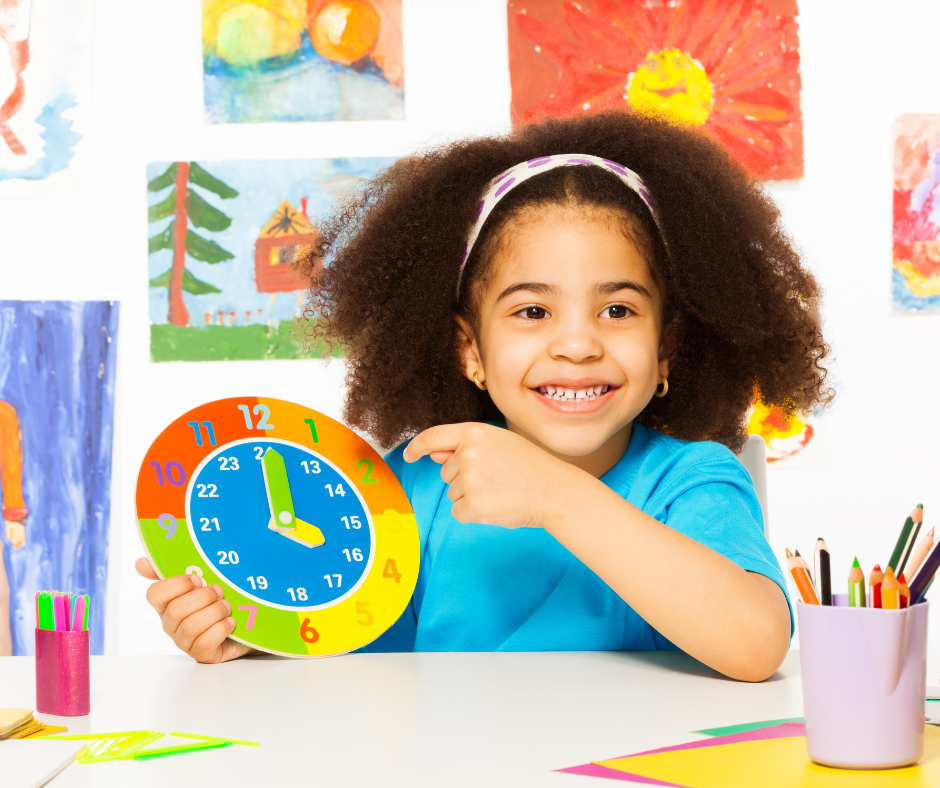
Time Management Tricks for Children by Maria lourdes A. de Vera

CHILD DEVELOPMENT ARTICLES BY MARIA LOURDES A. DE VERA Time management tricks for children A parent does not have to repeat instructions over and over to remind children to get things done on time. The constant reminder can be annoying. Nobody wants to listen to a broken record that cycles itself back in a loop. It can be tiresome to hear the same thing over and over. Some children tend to lose interest or get bogged down by the nagging. Depending on how adults deliver the reminders it can also diminish the inner drive and motivation of the child by what is said. Giving instructions is different from following through given instructions. To get children to do things is to inspire participation. The magic is to find a way to take an active role. Doing things and accomplishing simple tasks at time is one way to help children understand the passage and value of time. For very young children, set a routine gradually introducing them to establish a set schedule of daily activities. Coaching and guiding children is a process of drawing out their inner sense of order. It reinforces their ability to make choices and weight outcomes. Little steps that are consistent can lead to stability. Over time, children master simple tasks and are ready to perform much more challenging roles. Teach children to plan. Taking ownership of tasks and over time management happen when our kids view themselves as fully capable and not requiring help. Taking ownership gives a sense of fulfilment. Creating their own calendars can be fun. When setting and planning a daily schedule. Identifying activities and allocating time orients a child. It can be used as a time to share bonding moments. Conversation is a two-way process. Allow the child to share her thoughts and act as a caring outsider providing guidance and support. Be there for the child, see her through the decisions and choices made. As they grow older, they show facts and then step back. Give enough space to allow them to make choices—good or bad—for themselves. Whatever the outcome, just be there to help them see through neither put them down for less desirable outcomes. Making big decisions in the future adult life goes a long way. There is a time when you can choose for a child but it is also helpful to remember that children appreciate being able to make a choice and choose their own preference. Independence is earned, learned and achieved. How to manage time is a skill that is closely related to knowing one’s task? For simple and smaller tasks, have children pick a time to work with and with guidance. Reinforce good behavior with no criticism. Remember that the measure of excellence is not based on adult standards but rather on the child’s progress. Time management means managing myself. Growing up is a journey to cherish not a burden to drag. Linkedin Twitter Instagram

Time Management Tricks for Children by Maria lourdes A. de Vera Read More »

Developing the concept of time in children - by Maria Lourdes A. de Vera

Developing the concept of time in children by Maria Lourdes A. de Vera

CHILD DEVELOPMENT ARTICLES BY MARIA LOURDES A. DE VERA Developing the concept of time in children Time is an abstract learning for children to grasp. Introducing time to young children is done through experiencing time. The experience of time teaches the child the concept of what time is. It is significant that they first develop the concept of passing time. Time as it is abstract also needs to be introduced visually as what can be observed through nature. Children need to experience what a certain length of time feels. It orients the child about the measure of time corresponding to certain aspects of life. Experience with nature is the most basic in introducing the concept of time. Seeing the sun rise identifying morning, the setting of the sun as the prelude to nighttime and night comes with the shining moon. This is the time where the internal clock is likewise significant experience. It is the perfect time to attune the body to the child’s daily routine. The variation between rest, recreation and purposeful activity. The amount of time to sleep and wake up. Having a feel for the changing and passing of time grounds a child. Thus, establishing predictable daily routines is great in introducing the concept of time. Consistent routines help children feel secure and safe. Then one can help the child to name the activity. Naming the activity and assigning a time to it provides the notion of order and sequence. Time comes with the experience of order and sequence. It is best felt and experienced by the child. Early childhood is the best time to establish the concept of time alongside math’s in a playful, comfortable and easy way. Building a solid foundation in early math’s using hands-on learning and real-life experiences is a great way to learn numbers and time. Young children are still developing the attitude towards time and concept of time, activities need to be planned according to a child’s age and understanding. Activities need to be simple, fun and interactive. Here are some tips to consider when creating a daily routine with children 1. Aspects of time refer to time in hours or time of the day, weeks, months, seasons, years and periods. Time covers everything. Learning about morning, noon, afternoon and evening can be a great start. Identifying winter, spring, summer or fall. One does not have to force a child to memorize all these concepts. Repetition and reciting the days of the week with the child helps them recall order and sequence. Talk about time such as introducing the vocabulary connected with time. Using these words frequently also supports the child’s growing vocabulary: Today is Monday  Yesterday was Tuesday Tomorrow will be your birthday Summer is coming soon Winter is just round the corner Words like last year, this year or next year 2. The order of activities includes sleeping and waking, rest and recreation. It refers to the child’s daily activities from morning till night time. Brushing, bathing, changing clothes, nature walks, mealtime and playtime. 3. Marketing, Cooking and mealtimes. It teaches the child the activities of daily living. It gives a feeling for the passing of time. Such as how long does it take to go to the Grocery and back. Concept of time such as quick, fast and long time. These statements give a child a descriptive approximation of time. Using terms as minute and seconds also provides an experience of the passing time. Telling them: We will eat in a while, or mealtime in 30 minutes We will cook porridge in 20 minutes Water boils in 4 minutes Let’s steam vegetables for 15 minutes It orients the child to both the action, activity and the concept of passing time.  Developing a healthy attitude towards time is important from childhood. A good habit of structuring daily activities, managing time and ordering the activities is a skill learned and practiced. The concept of time lays the foundation of management. Ordering and sequencing things as much as getting it right and doing things in a smart way not the hard way. Getting things done even when time is tight and pressures are high is a skill developed and with the right attitude. A child who understands the value of time is better at managing, coordinating, organizing and planning how to divide time between activities. Linkedin Twitter Instagram

Developing the concept of time in children by Maria Lourdes A. de Vera Read More »

Shopping Cart